You have seen photos of people hanging from a cable above the void and thought “why not me?”. Good news: via ferrata is one of the easiest ways to discover the mountains and rock. Here is everything you need to know before your first outing.
What is a via ferrata?
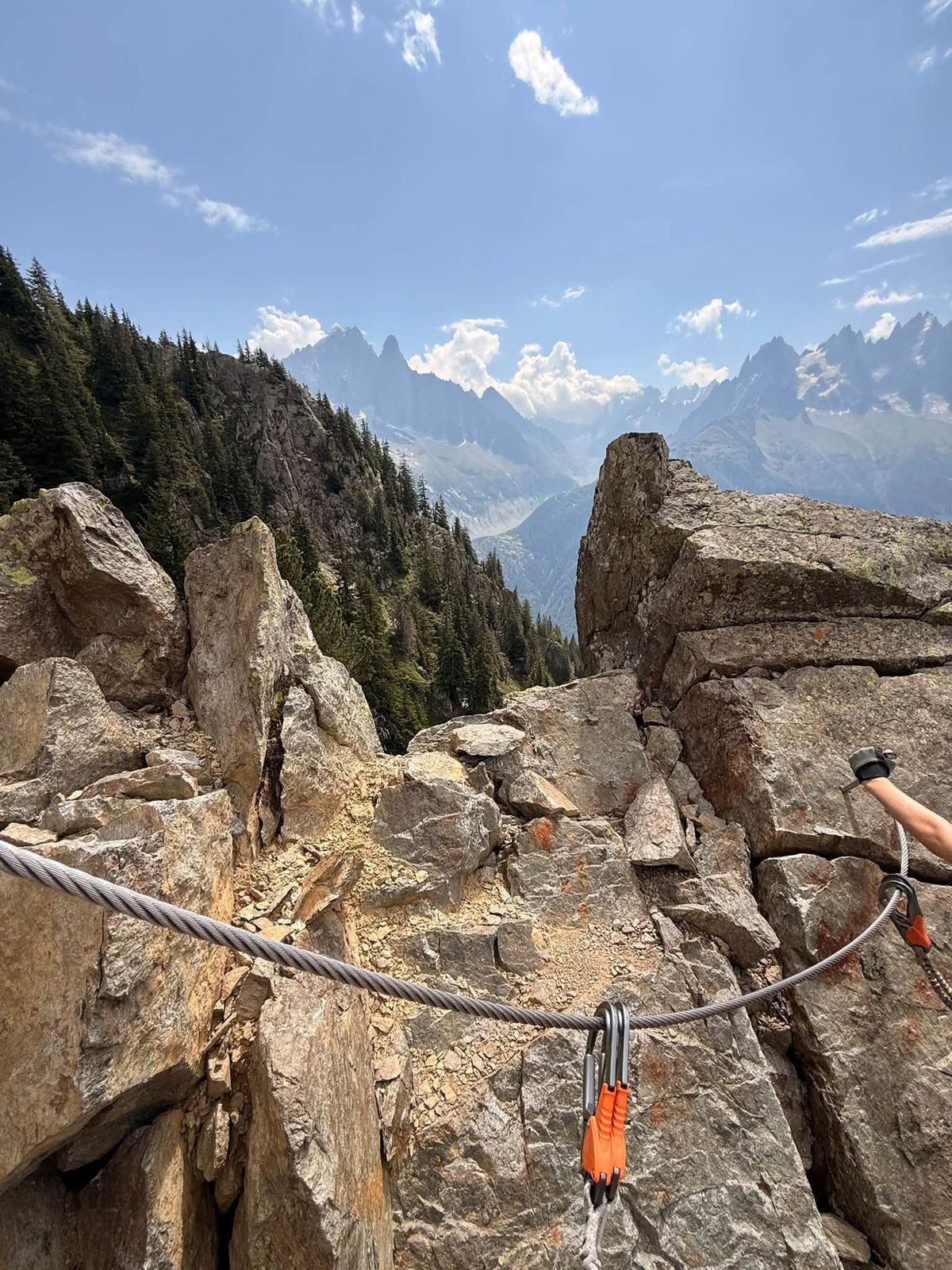
A via ferrata (“iron path” in Italian) is an equipped route on a rock face: a steel cable runs all the way along, with rungs, steps and sometimes ladders, footbridges or a monkey bridge. You move along while permanently attached to the cable with a special kit: that is what lets you go where you would otherwise need to be a climber.
Is it for me?
- You don't need to be a climber. An easy via ferrata only needs normal fitness: if you can walk a few hours in the mountains, you can start.
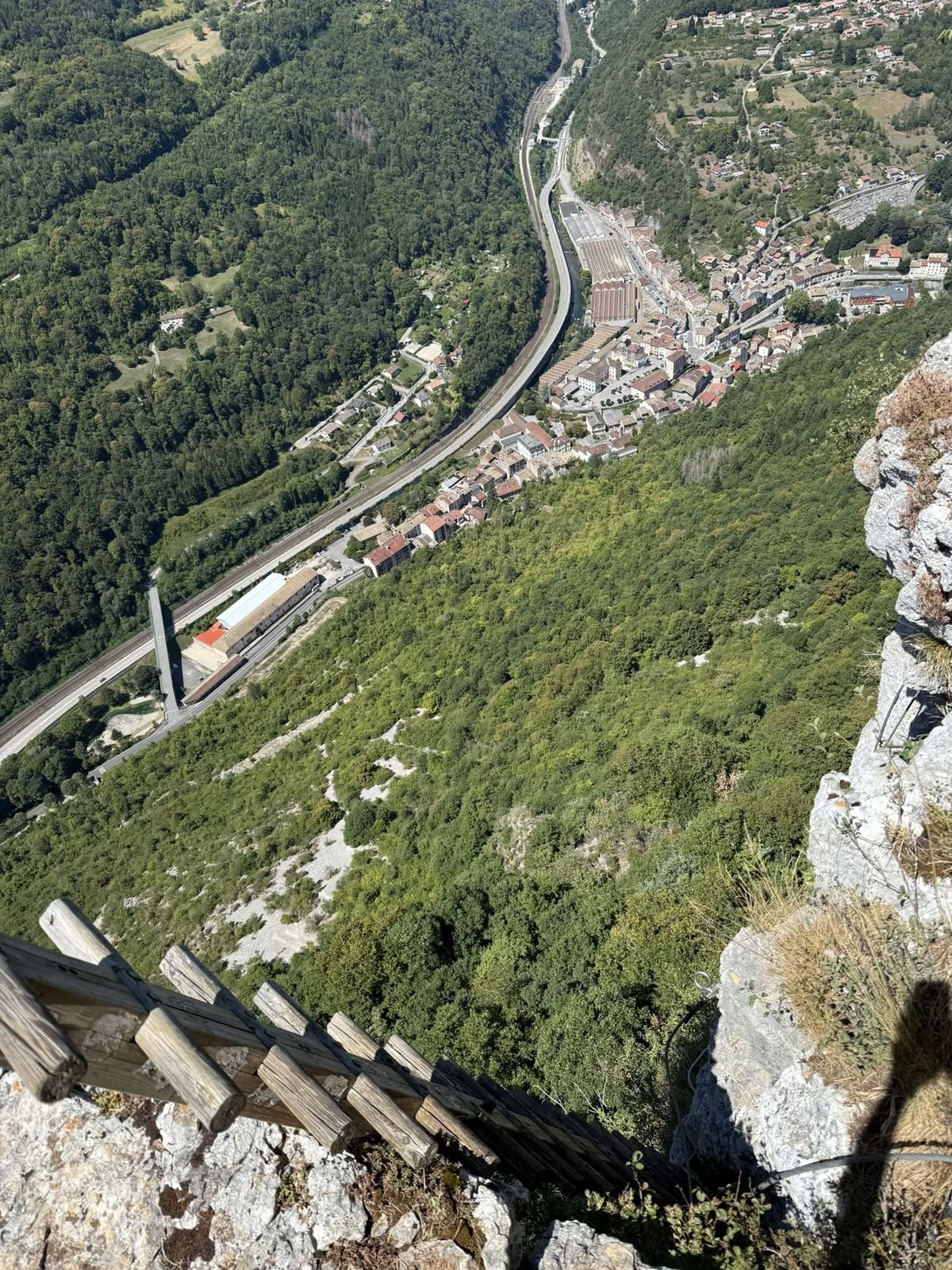
- Afraid of heights? Many beginners worry about it. On an easy route the drop is there but you are always clipped in; start short, with an escape route, and you will quickly see whether you feel at ease.
- Your arms will work. It is mostly your legs that should push; on harder routes (D and above), vertical or leaning sections need strong arms.
- With the family? Yes, on suitable routes. Many via ferratas state a minimum height (often around 1.30 to 1.40 m to reach the holds and the cable): it is shown at the start and, when we know it, on our route pages. Most via ferrata kits are designed for a weight of about 40 to 120 kg (check the instructions): below that, the child must be roped up (belayed with a rope) by an adult who masters the technique, or by a professional, especially on exposed sections (see Roping up children). And remember that once you are committed, turning back with a child is often difficult. All the details in our guide Via ferrata with children.
Choosing your first via ferrata
The grade gives the difficulty of the hardest section: F (easy), PD (fairly easy), AD (fairly hard), D, TD, ED. In Switzerland, Germany and Austria you will rather find A to F or K1 to K6 (equivalence table). For a first time:
- aim for F or PD, possibly an “F to PD” route;
- choose the route based on the person who is the least experienced in the group, not the strongest;
- prefer a short route (1 to 2 h) with an escape route along the way;
- also check the approach walk and the return, which sometimes make the outing much longer;
- in summer, avoid a south-facing wall in the heat of the day;
- check that it is open (works, rockfall, seasonal closure): never attempt a closed via ferrata, its cable or anchors may be damaged.
A few easy via ferratas to start with, around the Greater Region and a little further:
- Die Burg – Neuerburg (Eifel, Germany) · F to PD · less than an hour from Luxembourg
- Ritterstieg – Neuerburg · PD to AD · circuit through the town, with possible bypasses
- SteBa – Dinant (Belgium) · F to PD
- La Source de la Moselle – Bussang (Vosges) · PD to AD
- Gorges de Moutier (Swiss Jura) · F to PD
- Via-Tyro d'Annecy – Montmin (Haute-Savoie) · F
To find others near you: on the Via ferrata page, type your town in “Where?” and filter by level.
With a guide or on your own?
With a guide (guides' office, instructor), gear is often provided, you learn the right moves and enjoy it stress-free: ideal for a very first time or with children. You will find professionals on our page Guides & pros.
On your own, you need your own gear and must know how to use it. No need to buy for a first try: sports shops near the sites often rent a full kit (helmet, harness, lanyards). Always go with at least one other person, with someone experienced the first time, and only buy your gear if you plan to go regularly.

Essential gear

- A helmet : compulsory, against falling rocks and knocks.
- A harness in your size.
- A via ferrata kit (lanyard) with energy absorber, meeting the EN 958 standard. A climbing lanyard or a sling is no substitute.
- Gloves (the cable damages your hands), shoes with grippy soles, water and a warm layer.

All the details are in our Gear corner.
What happens on the day
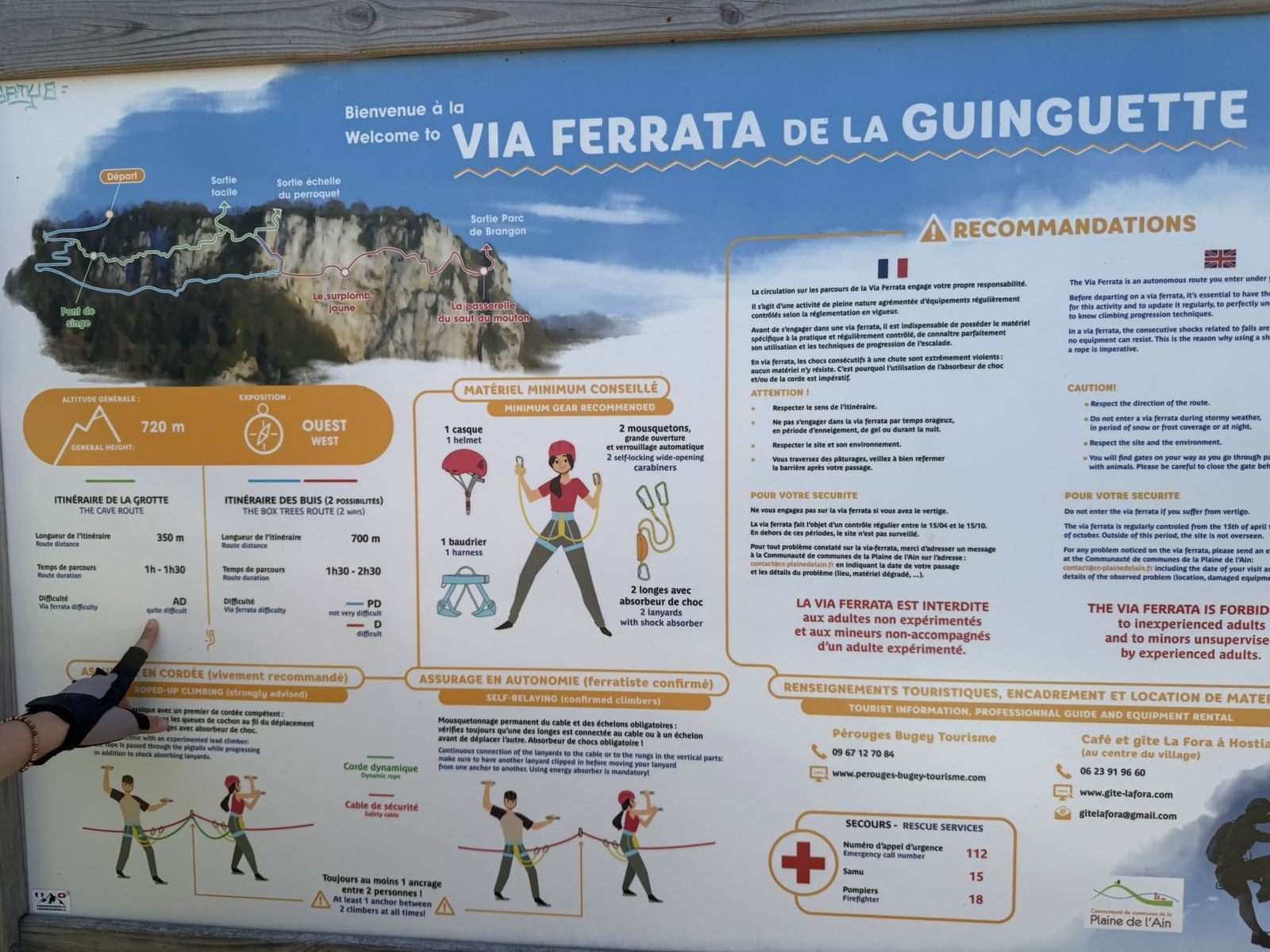
- Read the sign at the start : grade, duration, escape routes, instructions, sometimes minimum height and recommended gear.
- Gear up before the first cable, then do a buddy check (“partner check”): everyone checks the other person, from head to toe.
- Helmet well adjusted on the head, chin strap fastened.
- Harness : waist belt above the hips, straps tight against the body, buckles closed.
- Lanyard attached to the harness exactly as shown in the instructions.
- Carabiners : those on both arms open and close properly, so does the rest carabiner, and they stay held the right way round.
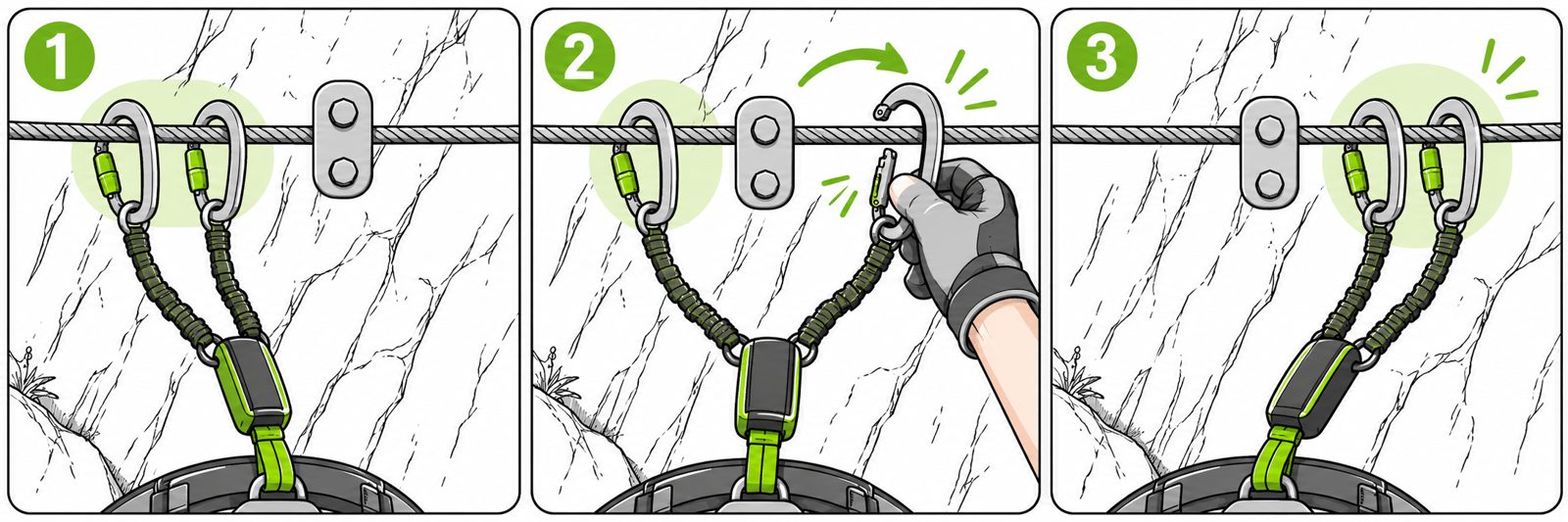
- At least one carabiner always on the cable : at each anchor point, move one carabiner, then the other, never both at once.
- Only one person between two anchors, and keep your distance from the person in front.
- Never clip an arm of your lanyard back onto your harness while moving: in a fall, the absorber could no longer deploy. The free arm hangs down, or goes on the gear holder provided by the manufacturer.
- Tired? Don't wait until you are exhausted: clip the rest carabiner onto a rung or the cable, sit back in your harness and relax your arms for a moment.
- To overtake, say so, wait for a wide spot and the agreement of the person in front. Stay focused even on easy sections: that is often where attention slips.
- Take your time : drink, eat, and don't hesitate to take the escape route if you don't feel well. Turning back is not a failure.
Safety and weather
- No via ferrata in stormy weather : the cable attracts lightning. Check the weather before you go (it is live on every ViaTrek route page).
- Rock and cables wet = slippery.
- Tell someone your route and when you expect to be back.
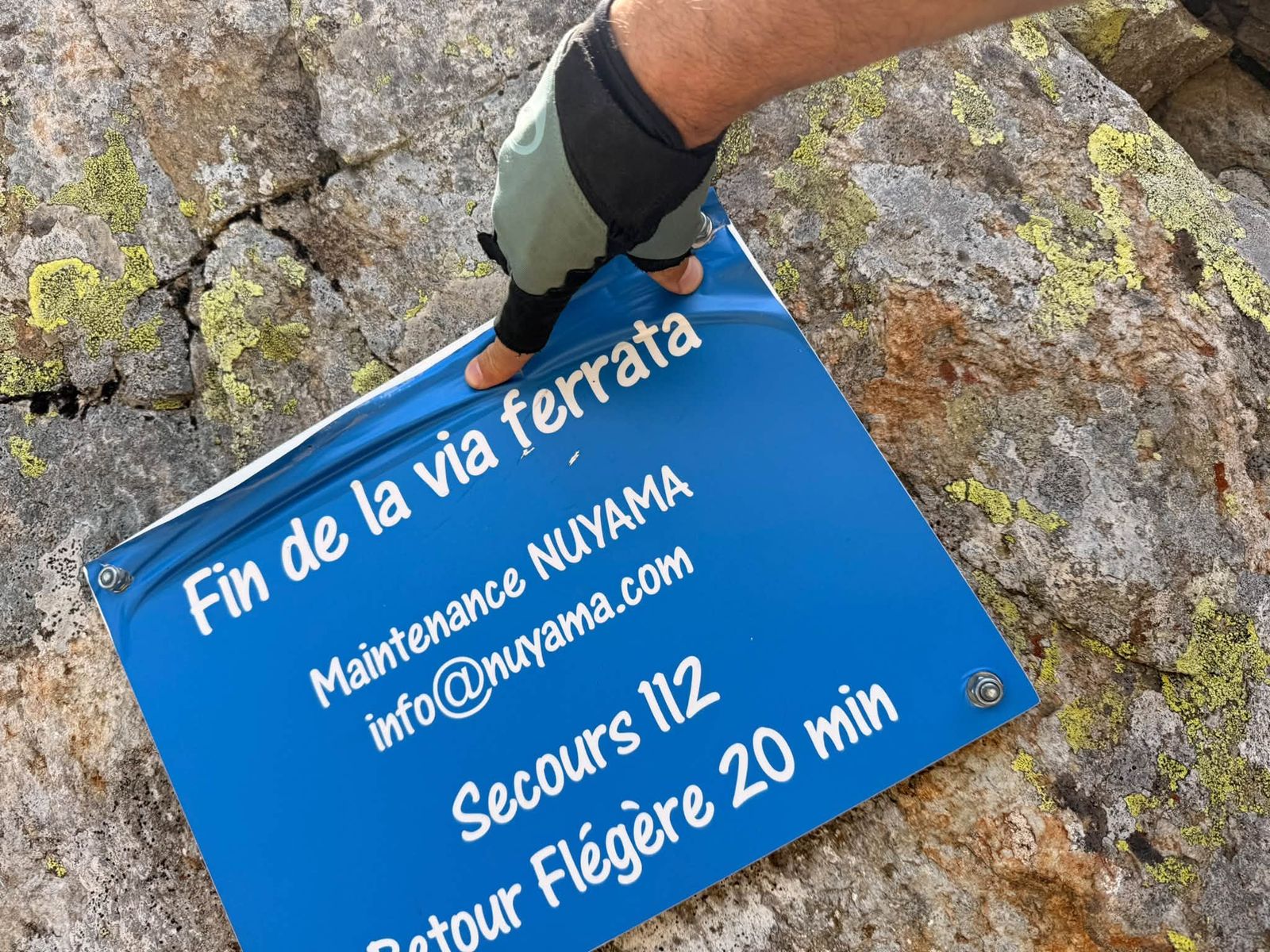
- In case of accident: 112 (European emergency number; in Switzerland, Rega also answers on 1414). Keep a charged phone and a small first-aid kit in your bag.
- Move carefully so you don't knock stones onto people below.
- Textile gear ages: check the dates and never reuse an absorber that has taken a fall.
What next?
Tick off your via ferrata in your ViaTrek logbook, note the date, leave a review and share your photos on the route page: it helps the next beginners choose. And if a via ferrata is missing from the site, suggest it !
Going further
Sources consulted and recommended: Swiss Alpine Club – via ferrata safety · FFME – via ferrata recommendations (PDF, in French) · Haute-Savoie Tourisme – introduction to via ferrata · Petzl – the buddy check on a via ferrata and its illustrated booklet “Access Book no. 3 – Via ferrata basics”.
This guide gives general advice. It does not replace training, the instructions posted at the start, or a professional's advice.