
PD, AD, C, K4… Depending on the country and the guidebook, the same via ferrata can be graded in three different ways. Here is how to find your way around, and above all how to read a grade to choose a route that suits your level.
The three scales and how they compare
| France | Hüsler (Germany, Austria, Switzerland) | K (Camptocamp…) | Who for? |
|---|---|---|---|
| F · Easy | A | K1 | Beginners, accompanied children |
| PD · Fairly easy | B | K2 | Fit beginners |
| AD · Fairly hard | C | K3 | Some experience, strong arms |
| D · Hard | D | K4 | Regular climbers, vertical sections |
| TD · Very hard | E | K5 | Experienced, overhangs and leaning sections |
| ED · Extremely hard | F | K6 | Very experienced, very physical |
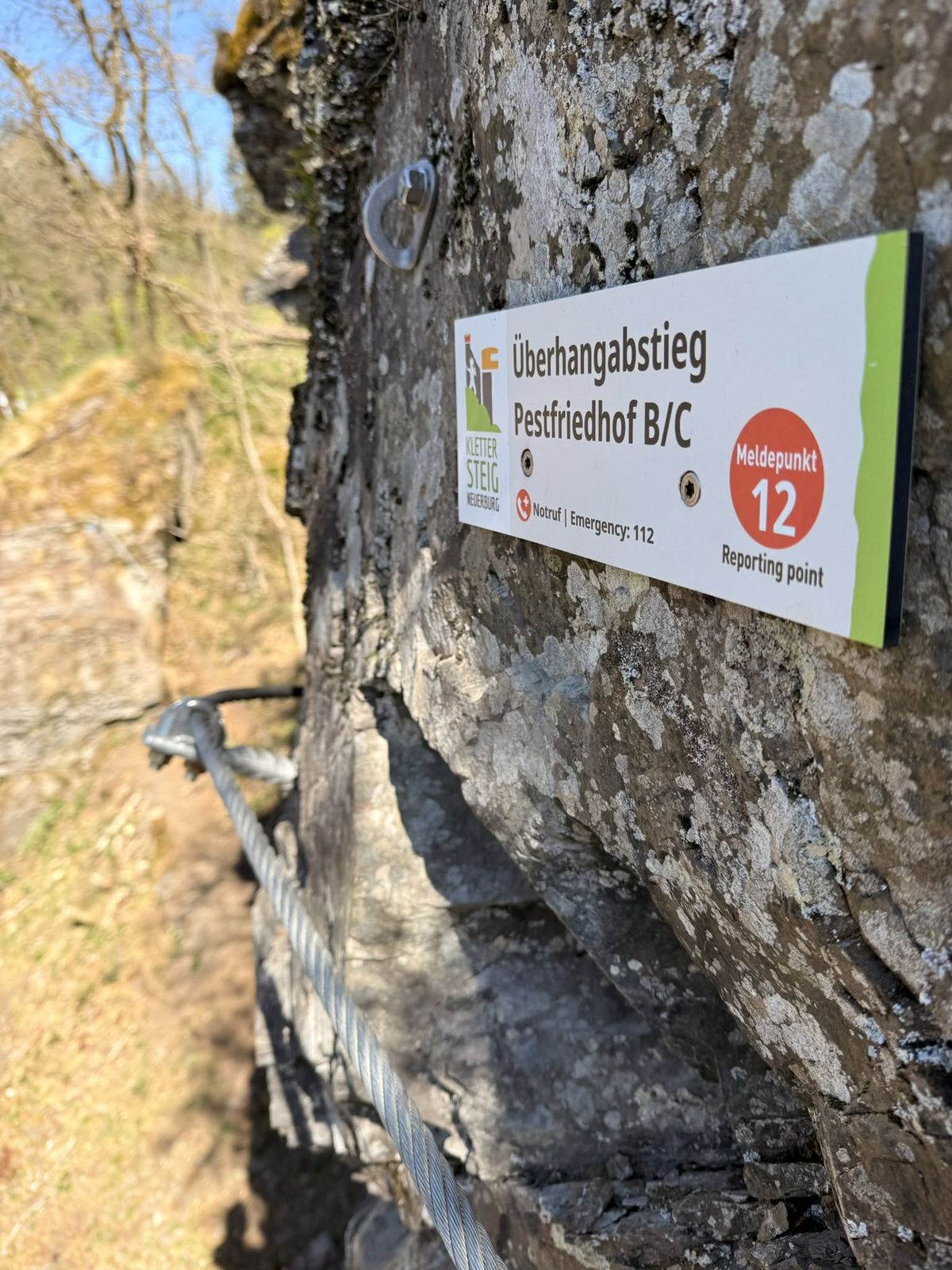
The equivalences are approximate: every guidebook and region has its own habits. A “+” (AD+, D+) or a double grade (“B/C”) means an intermediate level.
What a grade measures
- It mainly gives the difficulty of the hardest section : steepness, size of the holds, leaning sections or overhangs, arm strength needed.
- A via ferrata graded “F to D” or “PD to AD” has sections or variants of different levels: check which one you are going to do.
What it doesn't tell you
- Length and commitment : a 4-hour AD with few escape routes is far more demanding than a 45-minute AD.
- The approach and the descent, sometimes long and steep.
- Altitude, cold, exposure to sun or wind.
- The feeling of exposure : two routes with the same grade can feel very different to someone afraid of heights.
So always read the full route page: duration, elevation gain, escape routes, season, and reviews from members who have done it.
Examples for each level
A few via ferratas done by the ViaTrek team or close to the Greater Region:
- F to PD : Die Burg – Neuerburg (Eifel), L'Horloge – L'Argentière-la-Bessée (Hautes-Alpes), SteBa – Dinant (Belgium)
- PD : Le Rocher de l'Yret (Hautes-Alpes)
- AD : Les Évettes – Chamonix, Fort l'Écluse (Ain), Tournoux – Puy-Saint-Vincent
- D : Le Moléson (Switzerland), Les Vias de Vigneaux (AD to D)
- TD : Parc Thermal – Saint-Gervais (D to TD+)
- ED : Daubenhorn – Leukerbad (TD to ED, long variant)
On the Via ferrata page, you can filter by level around where you live.
Moving up from one level to the next
- Move upone step at a time (F → PD → AD…), and start the new level on a short route.
- If you only finished a route through sheer willpower, stay at that level for a few more outings.
- Always choose based on the person who is the least comfortable in the group.
For your very first outing, start with our guide Getting started with via ferrata.
Going further
Equivalence table also in our Gear corner. Hüsler scale: used by German-language guidebooks and signs; K scale: used in particular by Camptocamp.